




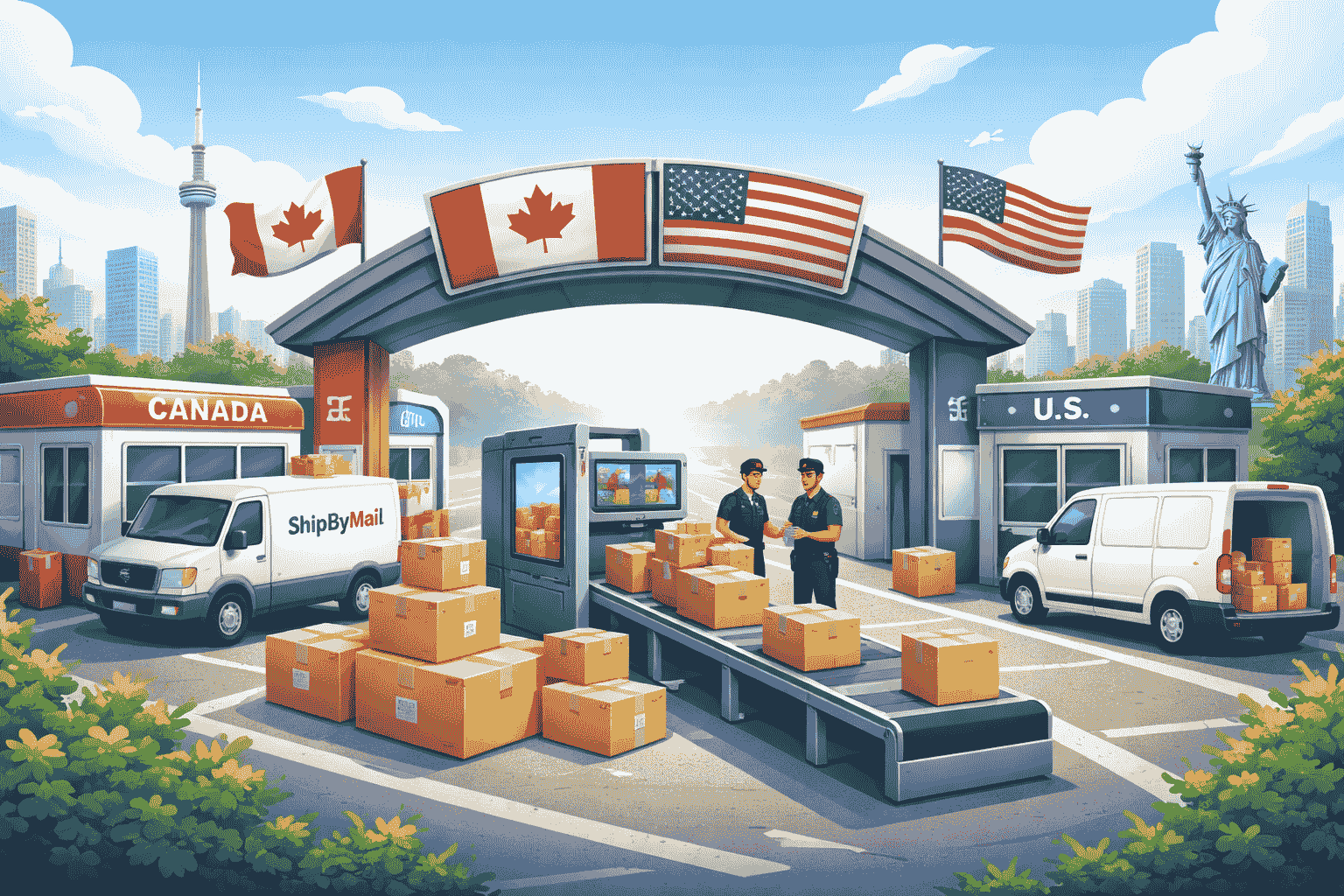
Navigating New U.S. Customs Rules: A Canadian Perspective
Table of Contents
What Are the New U.S. Customs Rules?
U.S. Customs and Border Protection (CBP) has tightened import rules to increase enforcement, improve data accuracy,
and collect duties more consistently. These changes affect all cross-border shipments, including parcels sent from Canada.
Key drivers behind the updates include:
- Abuse of low-value (de minimis) exemptions
- Increased cross-border eCommerce volume
- Stronger enforcement of tariff and trade remedies
For Canadians shipping to the U.S., the impact is most visible in duties, paperwork, and eligibility thresholds.
Key Changes Canadians Need to Know
1) De Minimis Rules Are Stricter
Historically, shipments under USD $800 could often enter the U.S. with fewer charges and less scrutiny.
Under updated enforcement, more shipments are reviewed and low-value entries are less likely to be “waved through.”
- More shipments are reviewed even under $800
- Misdeclared or commercial shipments are less likely to be cleared without review
- Courier shipments can be scrutinized more heavily than postal mail
What this means: Declared value, product type, and origin now matter even for low-value shipments.
2) More Accurate Customs Declarations Required
U.S. Customs now expects:
- Precise item descriptions (avoid vague terms like “gift” or “accessory”)
- Accurate declared values backed by invoices
- Correct HS/HTS classification
Incomplete or inaccurate declarations can lead to:
- Customs holds
- Reclassification and higher duties
- Brokerage or processing penalties
3) Tariffs Apply More Consistently
Many products entering the U.S. can be subject to standard MFN duties and additional tariff programs (depending on origin).
Even when shipping from Canada, U.S. duty treatment commonly depends on the country of manufacture.
4) Informal vs. Formal Entry Matters
Shipment value can determine processing type and fees:
- Under USD $800: Simplified entry (but not guaranteed duty-free)
- USD $800–$2,500: Informal entry with additional fees
- Over USD $2,500: Formal entry with higher compliance requirements (often including a bond)
This directly impacts total landed cost.
How These Changes Affect Canadians Shipping to the U.S.
From a Canadian perspective, the biggest risks are:
- Unexpected duties and fees at checkout
- Shipments delayed due to missing or unclear product data
- Items refused or returned by U.S. Customs
- Courier brokerage charges added after shipping
For online shoppers, issues often happen after the item has already reached the border—when changing details is hardest.
How ShipByMail Helps You Navigate U.S. Customs
ShipByMail is designed to handle modern cross-border requirements with clear, pre-shipment customs processing.
What ShipByMail Does Differently
- Customs completed before shipping (DDP – Delivered Duty Paid)
- Duties and taxes calculated once items arrive at the warehouse
- Accurate item classification and declaration support
- Visibility of costs before your shipment is released
This reduces surprise charges and helps prevent avoidable border delays.
Step-by-Step: Shipping to the U.S. Under the New Rules
-
Step 1: Ship Your Items to Your ShipByMail Address
Use your assigned ShipByMail address when shopping online.
-
Step 2: Provide Accurate Item Details
In your dashboard, enter:
- Item description
- Purchase value
- Invoice upload
-
Step 3: Duties and Fees Are Calculated
ShipByMail calculates applicable duties, customs fees, and courier charges based on received item details.
-
Step 4: Checkout with Duties Paid
All customs charges are paid before shipment is released, not on delivery.
-
Step 5: Package Clears U.S. Customs Smoothly
Your shipment proceeds with fewer surprises because key customs data is handled upfront.
Common Mistakes Canadians Should Avoid
- Declaring items as “gifts” to reduce duties
- Under-declaring item value
- Ignoring country of origin
- Shipping restricted items without checking rules
- Assuming under-$800 always means duty-free
These mistakes can increase inspection likelihood and total costs under stricter enforcement.
Examples of Affected Shipments
Example 1: Electronics from Asia via Canada
Even if shipped from Canada, duty and tariff treatment commonly depends on manufacturing origin.
Example 2: Multiple Low-Value Items
Combined shipments may exceed thresholds and require different entry processing and fees.
Example 3: Commercial-Looking Packages
Repeated shipments, high quantities, or reseller patterns can be flagged for additional review.
Conclusion
Navigating new U.S. customs rules has become significantly more complex for Canadians. Stricter enforcement,
tighter low-value screening, and broader tariff application mean mistakes are more costly than before.
ShipByMail simplifies the process by collecting duties upfront, improving declaration accuracy, and helping shipments clear
U.S. customs with fewer surprises.
Next step: Create a ShipByMail account and ship to the U.S. with confidence under the latest rules.
Are shipments under $800 still duty-free?
Not always. Outcomes can depend on product type, origin, and how accurately the shipment is declared.
Do U.S. customs rules apply to Canadians?
Yes. All shipments entering the U.S. must comply with U.S. import rules, regardless of sender nationality.
Will customs fees be charged on delivery?
With ShipByMail, duties and taxes are collected upfront (DDP), helping avoid delivery-time surprise charges.
Can ShipByMail handle customs paperwork?
Yes. You provide accurate item details and invoices in your dashboard, and ShipByMail prepares the customs documentation.










Leave a Reply